The Best IFS Books: My Top Recommendations for Clients and Therapists
As recommended by Lucy Orton, IFS Therapist + Therapy Intensives Specialist

Top Internal Family Systems books by Richard Schwartz, Dr Becky Kennedy and Jay Earley.

As a therapist and avid reader, there is nothing I love more than sharing books that genuinely move the needle for the people I work with. In the case of Internal Family Systems, I've been recommending books in this space for years, and the list keeps getting richer.
IFS is a modality that rewards curiosity. The more you understand the framework, the deeper your experience of it becomes, that’s whether you're a client currently working with me, someone exploring IFS for the first time, or a therapist looking to deepen your own understanding,impact and personal work.
In my experience, clients tend to fall into two camps. Some want every book, podcast and resource they can find; they've become as captivated by the thinking as I am, and their sessions are richer for it. Others prefer the purely experiential path: spending time between sessions checking in with their parts and arriving the following week with remarkable observations. Both approaches are completely valid.
This post is for the book- and resource-curious ones, and for anyone else who wants to understand what IFS is really about before or alongside stepping into the work.
I've included links to Bookshop.org where available, which supports independent bookshops. I only recommend books I genuinely believe in: these are the titles I return to again and again, and that my clients consistently tell me have been transformative.
If you're intrigued by IFS but prefer doing to reading, you can explore my IFS Intensives here — a powerful way to experience the depth of this work in a concentrated format.
For others, they are more invested in the experiential IFS practice than in the theory; often spending time checking in with their parts between sessions and coming to me the following week with amazing observations and interactions. These clients are perhaps not as keen to read around the modality or hunt out podcasts exploring IFS further but their engagement is equally high.
Either approach is completely valid and appropriate. However, I have created this blog post to use to direct clients, non-IFS colleagues and other contacts who may be interested in exploring the top 4 IFS books that I recommend above and beyond all others. If you’re the kind of person who loves this kind of content, read on! If you’re intrigued by IFS but prefer ‘doing’ rather than ‘reading about’ then feel free to book in for a free consult , read about my unique IFS Intensives approach HERE.
Here is a little more detail on the books illustrated in the graphic above (including affiliate links on where to buy them):

The first (and my favourite) book on the list is actually not a standalone IFS book, but it’s such a brilliant work that I have to put it as my top pick. Dr Becky is a clinical psychologist and the leader of a parenting movement and community, also called ‘Good Inside’ which is extremely compatible with IFS. As well as referring directly to IFS throughout, Dr Becky’s book has huge resonance for those in IFS therapy; it touches on reparenting yourself, reminding yourself that you ARE good inside, and ultimately is a very moving exploration of what it is like to be a child, be a parent and be a human being.
10/10 Highly recommended to all!

No Bad Parts is perhaps the key text for anyone interested in the background, structure and evidence behind the Internal Family Systems Model. The title really sums up the compassionate approach to being human that lies at the heart of IFS: that we are made up of parts and none of them are inherently bad.
In the book, IFS’ founder, Richard Schwartz, explores how the model came to be and how he was able to develop the therapy alongside his clients, learning from their experience and their unique inner worlds.
A great book for anyone wanting to delve further into IFS, that is written in a compelling and enjoyable way.

With its focus on couples and intimate relationships, through an IFS lens, this book is invaluable for thinking about how we interact with our loved ones and how we can improve outcomes by changing our perspective.
As well as being my go-to recommendation for anyone experiencing relationship issues or challenges (or perhaps merely wanting to know how to be a better partner), this book also includes a thorough exploration of the IFS model. It works equally as a first text in lieu of No Bad Parts as it is so thorough in its coverage of IFS as a whole.

This step-by-step guide is not a replacement for having your own, guided sessions with a trained IFS therapist, but it can be a useful bridge between reading about and understanding the IFS model and working internally.
One of the aspects of this book that I most enjoyed was the ‘parts’ in the case studies - illustrated graphically and with verbatim examples from therapy sessions. This can offer an insight into what an IFS session is like for someone who has either had no therapy before or who has only experienced more traditional talking therapies or CBT.
Updated March 2026: Two More IFS Books I Can't Stop Recommending
Since I first wrote this post, two more books have earned a permanent place on my recommended list. Both have been consistently popular with my clients — and for very different reasons.
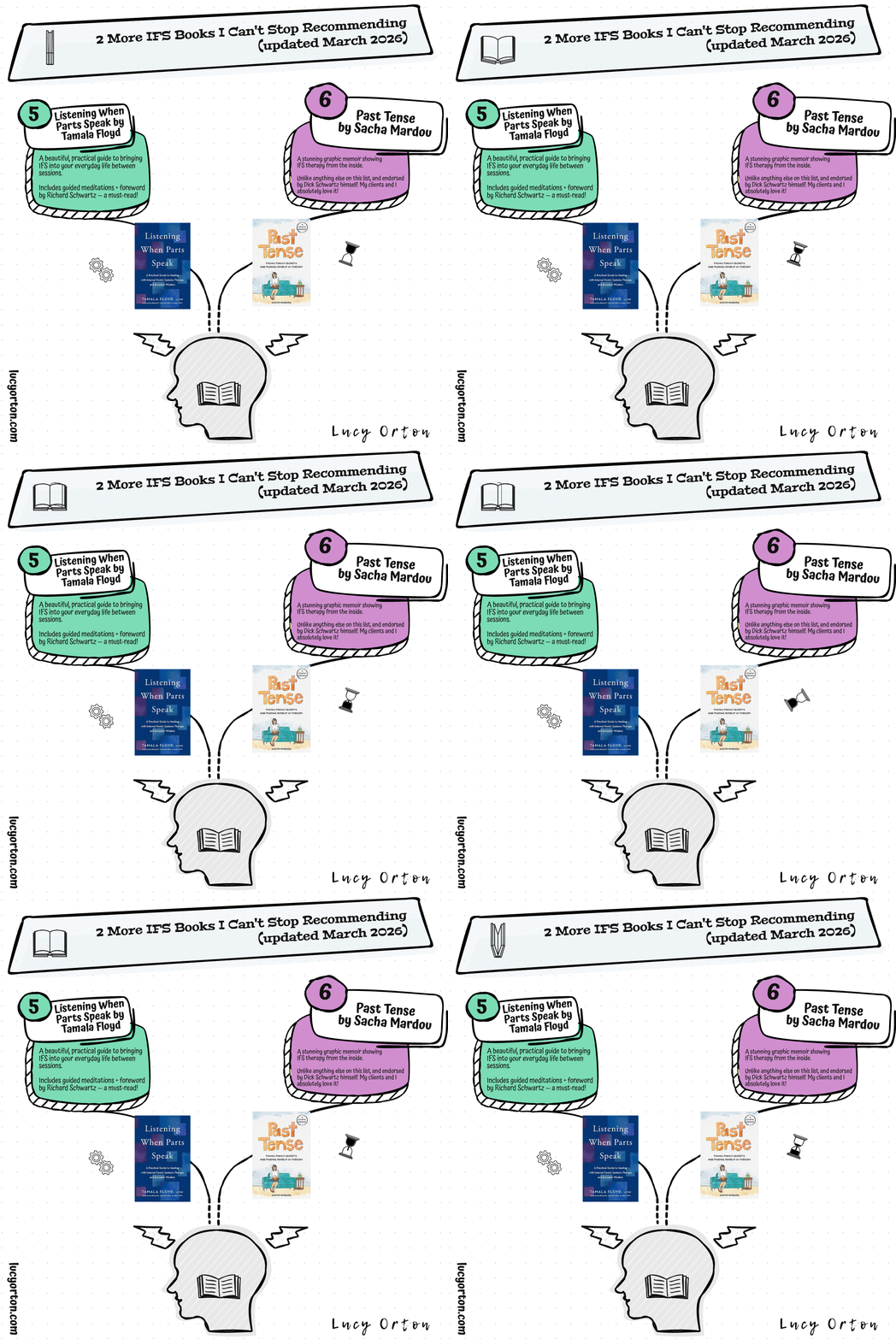
2 more IFS books I can't stop recommending — updated March 2026
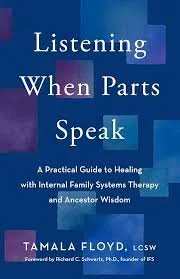
A practical guide to healing with IFS by Tamala Floyd.
5. Listening When Parts Speak — Tamala Floyd
This is a beautiful and practical book by Tamala Floyd, an IFS lead trainer and IFS conference speaker with over 25 years of experience, and it has a foreword by Richard Schwartz himself; this tells you everything you need to know about its credentials.
What makes this book particularly special is its focus on bringing IFS practice into your daily life and its beautiful, deep meditations. It’s not just what happens in the therapy room, but how you can develop an ongoing relationship with your parts between sessions. Each chapter includes its own guided meditation, which makes it genuinely experiential rather than purely theoretical.
I recommend this especially to clients who are already in IFS therapy or who have completed an intensive with me and want to deepen and extend their between-session work. It also appeals to those who are drawn to the ancestral, legacy and intergenerational dimensions of trauma healing. It's warm, accessible, and genuinely moving.
Available on Bookshop.org and all major retailers.
6. Past Tense — Sacha Mardou
This one is unlike anything else on this list — and that's exactly why I love recommending it.
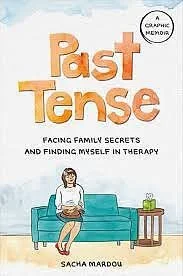
A unique book about therapy and family secrets by Sacha Mardou
Past Tense is a graphic memoir by British artist and writer Sacha Mardou, documenting her three-year journey through IFS therapy. It's fully illustrated, deeply personal, and, perhaps most powerfully, it shows you what the inside of an IFS therapy process actually looks and feels like in a way that no purely textual description can.
Richard Schwartz himself endorsed it, writing that he wept reading it. That's a pretty meaningful endorsement!
What I love about recommending this to clients is the reaction it consistently gets: relief, recognition, and the feeling of being deeply understood.
Seeing IFS therapy depicted from the inside, with images for the parts, the protectors, the exiles, the moments of breakthrough, normalises the process in a way that is both demystifying and genuinely moving.
It's also a quick read in the best possible sense. You'll likely finish it in one sitting — and you'll be thinking about it for weeks.
Particularly recommended for anyone who finds the idea of therapy daunting, or who wants a felt sense of what IFS work is really like before committing to it.
Available on Bookshop.org and all major retailers.
Ready to go beyond the books?
Reading about IFS is a wonderful starting point. But as I frequently say, IFS really needs to be experienced to understand its true power.
If you're ready to go deeper, an IFS intensive is the most powerful way to experience this work. Rather than spreading sessions across weeks or months, an intensive gives you concentrated, uninterrupted time to go to the places that matter most, and to actually feel the shift.
Sessions are available online worldwide, and in person in Southeast Asia.
Want to experience IFS before diving into an intensive?
If you're not quite ready to book but want a felt sense of the work, I have a growing library of guided IFS meditations on Insight Timer. Free to access, and a gentle way to start building a relationship with your parts.
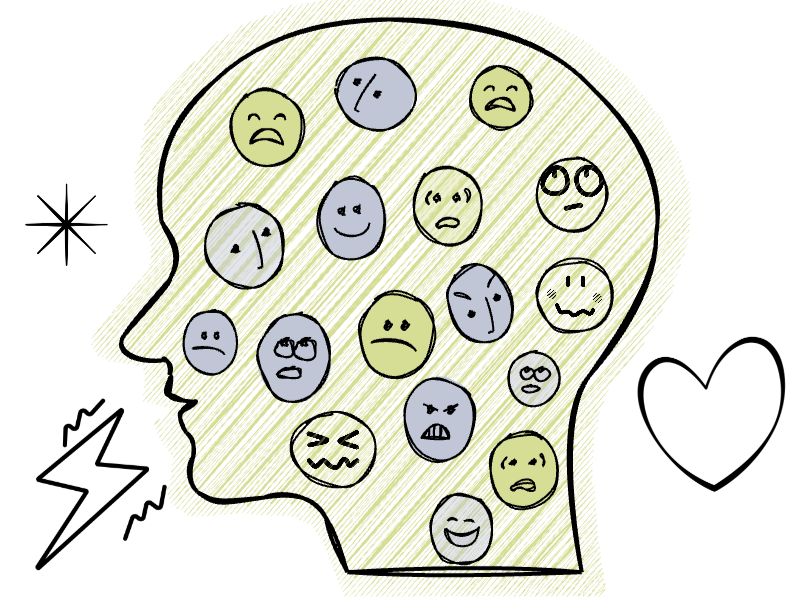
The books explain the theory. The therapy is where you actually meet the parts.
Are you a therapist?
Are you a therapist who's been drawn to IFS and wondering how to bring it more fully into your practice - and optimise your impact? I work in various ways with IFS and Brainspotting trained therapists who want to add intensives to the way they work. This isn't just professional development. It's a clinically rich, financially transformative model that changes what's possible in your practice, without seeing more clients or working longer hours.